Thursday, 11 November 2010

Analysis of Snatch


Snatch is a 2000 British gangster comedy film written and directed by Guy Ritchie, and featuring an all star cast. Set in the London criminal underworld, the film deals with two intertwined plots: one dealing with the search for a stolen diamond, the other with a small-time boxing promoter named Turkish (Jason Statham) who finds himself under the thumb of a ruthless gangster known as Brick Top (Alan Ford).
From the beginning the open title sequence is fast paced. We first meet the main characters sitting in the back of a van wearing what seem to be Jewish outfits which could be a disguise. As they begin to take off their fake facial hair and hats one of the characters brings out what seems to be a rather large diamond. This diamond could be of huge importance as the plot unfolds. The diamond then gets bigger and the camera turns around the name of the film appears on the middle of the diamond in a bold white font which is underlined and has a full stop. At this point we are introduced to some of the character and their names.

The first one is Cousin Avi who is holding a magnifying glass to the diamond we had just seen which makes the audience wonder what the relevance of this diamond is and that cousin Avi is checking to see if its real also it shows a process by which the diamond was possibly stolen in the first scene and then given to cousin Avi (blue background with white stars at the top and bottom of his of name). Cousin Avi places the diamond in the safe and on the other side of the safe we see the next person the diamond changes hands with in this criminal process and its SOL( dark green background with his name in white bold font and underlined) His picture then turns into an animation . When he places his hand in the safe he brings out some money making the audience think that the diamond has been sold for money. As Sol throws the money it lands on the desk of Mickey (dark green background with bold white font and a star at the bottom).


Mickey throws a bag full of gold to Vinnie who catches it (Vinnie’s picture is in sepia and we can see him holding the gold and the bag). The camera then flips around and we are introduced to (Franky four fingers. The gold which Vinnie held in his hand becomes a gold watch that ends up on a poker table. The camera freezes on Franky and we see his image in black and white. We can now clearly see why he is called Franky four fingers as he is missing a finger and is also holding up what seems to be a good hand of cards, queen, kings etc. As Franky places his hands of card the shot changes and we meet a character called Turkish who has picked up a hand of cards. The title sequence flows very well and each section helps to introduce us to all the characters and what also tell us what part they may play in the film. The sequence lasts for about 1minute 30 seconds and we are introduced to the main cast. The last character we meet is Brick Top, he seems like a really tough guy who hammers a guy in the face, we see the man’s teeth broken which then turns into the diamond and the original scene the title sequence opened with. It seems as if it is an effective way of storytelling and showing us what will happen rather than what has happened and the audience knows what they are watching but they do not know how it will end up. We can already tell who the villain is Brick Top.


The type of camera work used is medium shot, close up shot and extreme close up shot. All these shots have different meanings and when the audience watches it they are all significant such as the close up of the props, diamonds, jewellery, hammers, the shots where we are introduced to the characters and it’s easy for us to identify the characters.
The medium shot is used to show the character and the location he/she is around. For example at the beginning it shows four men in the back of a van holding a diamond, this gives us an indication to a robbery.
The soundtrack is very jazzy and upbeat it braces the audience for the ride ahead. This type of music is very sharp and fast. The editing is smooth and cuts from one clip to another making a continuous and fluid transition. Editing methods such as cross dissolve helped it make the process smoother. The props used in the sequence are a Diamond, weapons such as a hammer etc, gold, and cards. The costumes the characters wear in the first scene in the van are "Jewish Outfits". The rest wear suits and casual clothing apart from the gym scene where the character is dressed in gym clothes.

Wednesday, 10 November 2010

Saul Bass

                                                      Saul Bass

Saul Bass was an American graphic designer and Academy award-winning filmmaker. Bass is best known for his picture title sequences. In fact Saul Bass was a genius at it, he took title sequences to a whole new level. Bass worked for some of the greatest Hollywood filmmakers ever, these include the likes of Alfred Hitchcock, Otto Preminger and Martin Scorsese.

Saul Bass was born in May 8, 1920, in New York City. He studied at the Art student's league in Manhattan.  He began his time in Hollywood doing print work for film ads, until he collaborated with filmmaker Otto Preminger to design the film poster for his 1954 film Carmen Jones. Preminger was so impressed with Bass’s work that he asked him to produce the title sequence as well. This was when Bass first saw the opportunity to create something more than a title sequence, but to create something which would ultimately enhance the experience of the audience and contribute to the mood and the theme of the movie within the opening moments. Bass was one of the first to realize the creative potential of the opening and closing credits of a movie. So in 1955 Bass created his first title sequence which was for Otto Preminger's, The man with the Golden Arm. This was a massive success which shot Bass to fame and all the best filmmakers wanted him to create their title sequences. 

A great quote from Saul Bass himself - "My initial thoughts about what a title can do was to set mood and the prime underlying core of the film's story, to express the story in some metaphorical way. I saw the title as a way of conditioning the audience, so that when the film actually began, viewers would already have an emotional resonance with it."

Saul Bass worked write up until the year before he sadly past away in April 1996 at the age of 75. His last title sequence was for Martin Scorsese's film, Casino, in 1995. The title sequence below is for Casino and Saul Bass's last ever title sequence. I am also going to analyze it and prove how much of genius Saul Bass was.


Creating a Thriller

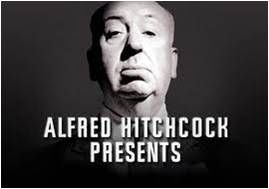
In the view of Alfred Hitchcock:

The Audience:
When creating a thriller it is so important that everything in the screenplay is done for the audience. There is nothing more important than to show how each scene is going to affect the viewer. The content must engage them along with reeling them in. The characters should be used to tease the viewer and pull them along wanting more. 
 
Frame of emotion:
It is well known that emotion is the ultimate goal of each scene. Emotion can be in the form of fear, laughter, surprise, sadness, boredom, anger etc. In a scene at first you should consider where to place the camera as you should already know what emotion you want the audience to experience. Emotion come directly for the actors eyes, you can  the intensity of the emotion by placing th camera close or far away form those eyes. a close up will feel the screen up with emotion, and pulling away to a wide angle shot will dissipate the emotion. A sudden cut from wide to close-up will give the audience a sudden surprise. Sometimes a strange angle above the actor will heighten the dramatic meaning.

Camera is not the camera:
Let the camera become a real person. The camera should take on human qualities and roam around looking for something suspicious. This allows the audience feel that they are involved in uncovering the story. Scenes can often begin by panning a room showing close-ups of objects that explain plot elements. This method goes back to Hitchcock's beginnings in silent films. Without sound, film makers had to create ways to tell the story visually in a succession of images and ideas. You should always use the camera as more than just a camera.

Dialogue means nothing:
A good way to pull the audience into a characters secret world is to get the character to be pre-occupied with something during a dialogue scene (Their eyes could be distracted while the other person doesn't notice). Alfred Hitchcock said "People don't always express their inner thoughts to one another. A conversation may be quite trivial, but often the eyes will reveal what a person thinks or needs".

Keep the story simple:
If the story complicated, confusing or requires a lot memorization from the audience, you are never going to get suspense out of it. The key to creating that raw Hitchcock energy is by using simplistic, linear stories that the audience can follow easily. Everything in the screenplay must be streamlined to offer maximum dramatic impact. Each scene should only include essential ingredients that make things gripping for the audience. An abstract story will bore the audience and that is why Hitchcock use to use crime stories with spies, assassinations along with people running from the police. These kinds of plots make it easy to play on fear, but are not mandatory for all movies.

Surprise and Twist:
Once you have got the audience into the story's gripping suspense, it should never end the way they expect. 'The bomb must never go off', lead the audience into one direction and then hit them with a surprise twist.  

 May cause MacGuffin:
The MacGuffin is the side effect of creating pure tension. When scenes are built around dramatic tension, it doesn't really matter what the story is about. If you have done your job properly, the audience will still be glued no matter what. You can use random plot devices known as the MacGuffin.  The MacGuffin is nothing! The only reason for the MacGuffin is to serve a pivotal reason for the suspense to occur. For Example in could be something as simple as government secrets.


What is a title opening sequence?

The title opening sequence is the method that cinematic films and television programmes present their title, key production and cast members. Also utilizing conceptual visuals and sound. The title sequence should not be confused with the opening credits, as this is usually nothing more than a series of superimposed text. In class we have been told to do some research on Soul Bass and Alfred Hitchcock. I will be uploading my research about them in due course.

Monday, 8 November 2010

What is a thriller?

A Thriller is a genre of literature, film and television. A thriller film uses tension, excitement and suspense. These are the main elements and are what differs a thriller to any other genre. Nearly all films today have sub-genres and thrillers are no different. Some thriller sub-genres can be: Crime (Oceans 11), Psychological (Phone Booth), Supernatural (What lies beneath) or Political (The Interpreter). The characteristics of a thriller usually have an atmosphere of murder, violence, menace and crime. The societies in thrillers are often portrayed as dark and edgy but they usually have a happy ending. Also thrillers love to endorse cliff hangers and plot twists. This is to thrill, excite and keep the audience at the edge of their seat, which the whole point of a thriller film.

Wednesday, 3 November 2010

Our Title opening sequence coursework.

We now finally know our group for this year's coursework. In my group it will be myself (Sam), Farah, Moe and Taylor. I have also received my coursework brief and I am now very excited about getting on with this project. We have to do a 2 minute (120 seconds) open title sequence for a thriller film. For me to prepare myself for this task I will be doing a lot of research. I am going to watch and analyze other thriller title opening sequences. This will help us to decide how our title opening sequence should look.

Monday, 1 November 2010

Preliminary Task

This is my preliminary Task:


Although this preliminary task does not look much now, I am sure it is going to help me out massively when I have to start my Title Opening Sequence project.